What is a Gas FeeNovember 2, 2026
8
5 min read
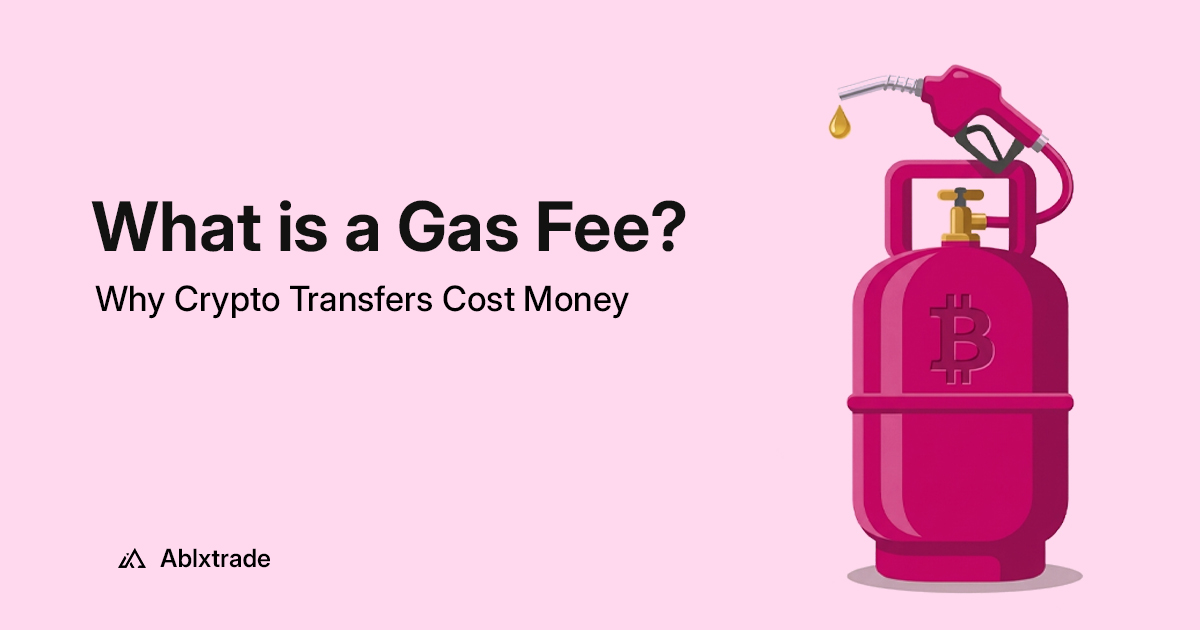
You send crypto to someone. The amount that leaves your wallet is a little more than the amount that arrives, or your wallet asks for a second coin you did not plan to spend.
That extra charge is called a gas fee. It confuses almost everyone the first time they see it, and it is one of the most common reasons beginners think they have been cheated.
This guide explains what a gas fee is, who it goes to, why it changes, and how to avoid paying more than you need to.
A gas fee is a small payment you make to the blockchain network every time you send a transaction. The people and computers that run the network — called validators or miners — verify your transfer and record it permanently. The gas fee pays them for that work.
“Gas” is the name Ethereum uses for this fee. Other networks use different names, but the idea is the same: no fee, no processing.
Simple analogy: Think of a danfo in Lagos or a matatu in Nairobi. Everyone pays a fare to get from A to B. When the road is empty, the fare is low. At rush hour, when everyone is trying to move at once, the fare goes up. A gas fee works the same way. The more people trying to use the network at the same time, the more you pay to be picked up quickly.
Not the app you are using, and not a bank. The fee goes to the network itself, to the validators or miners who confirm your transaction. Wallets and platforms only show you the fee and pass it on.
This is also why you cannot negotiate a gas fee or ask for a refund. It is paid the moment your transaction is processed.
• Congestion. When the network is busy, fees rise. When it is quiet, fees fall. In past busy periods, fees on Ethereum have jumped to tens of dollars for a single transfer.
• Type of transaction. A simple coin transfer costs less than a transaction that interacts with a smart contract, such as a swap or a DeFi action.
• The network you choose. Each blockchain has its own fee system, so the same USDT can cost very different amounts to send depending on the network.
• Upgrades. Improvements to Ethereum and the growth of Layer 2 networks have made everyday transfers far cheaper than they were a few years ago.
These are rough ranges based on recent data, not fixed prices. Fees move all the time, so always trust the number your wallet shows you before you confirm.
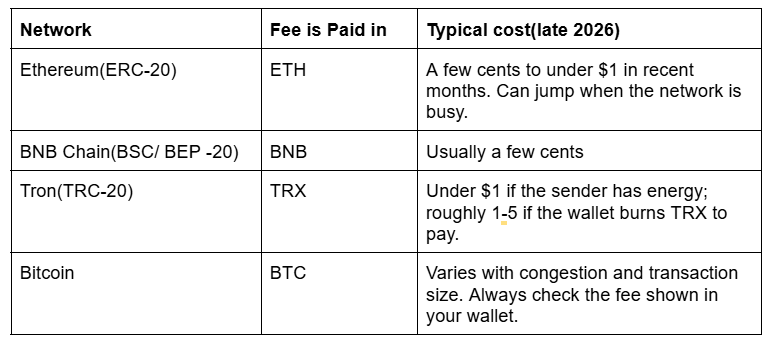
NB: The cheapest network is not always the same one. A few years ago, switching from Ethereum to another network saved a lot of money. Today, Ethereum transfers are often just a few cents, and on Tron the cost depends on whether your wallet has energy. Check the fee in your wallet, then decide.
People often lump every charge together. There are really three different ones:
• Gas (network) fee: paid to the blockchain for processing your transaction. It is charged in the network’s own coin.
• Withdrawal fee: a flat charge some exchanges add when you move crypto out of their platform to another wallet.
• Platform or conversion rate: the difference between the market price and the rate a platform gives you when you convert crypto to naira or KES.
• Check the fee before you confirm. Every good wallet shows it. If the number looks unusually high, wait and try again later.
• Pick the right network. Always match the network on the sending side to the network on the receiving side. Sending on the wrong network can mean permanently lost funds.
• Keep a little of the network’s coin in your wallet. You pay the gas fee in ETH, BNB, or TRX, not in the coin you are sending. A wallet with USDT but no gas coin cannot send anything.
• Avoid sending very small amounts. A fixed fee takes a bigger bite out of a small transfer.
• Avoid the busiest hours. If you are not in a hurry, quieter periods usually mean lower fees.
NB: Never chase a cheaper fee by guessing the network. A lower fee is not worth sending to the wrong network. If you are unsure which network a receiving address uses, stop and check before you send.
When you sell crypto on AblxTrade, you choose the coin and amount, review the naira value, and the app generates a wallet address for that transaction. You then send your crypto to that address from your own wallet. That sending wallet is where the gas fee is charged, in the network’s coin.
The generated address is valid for 24 hours and for that transaction only, so always send to the address shown for your current trade, and always on the network you selected.
Ready to explore cryptocurrency opportunities in Africa? ABLX provides secure, user-friendly platforms for trading and managing your digital assets.
Explore more insights about cryptocurrency, blockchain, and financial technology in Africa.