What is Blockchain NigeriaNovember 2, 2026
75
4 min read
You have heard the word blockchain more times than you can count. In crypto conversations, fintech news, government announcements, and even casual Twitter threads. Everyone seems to know it is important, but very few people can actually explain what it is.
If you have been nodding along without really understanding it, this guide is for you. No technical jargon. No assumed knowledge. Just a clear, simple explanation of what blockchain actually is and why it matters to everyday Nigerians.
Nigeria and blockchain
Nigeria ranked second globally for crypto adoption in 2024, processing approximately $59 billion in cryptocurrency transactions between July 2023 and June 2024. Nigeria is also home to 3% of the world’s blockchain developers, and the Nigerian government formally approved a National Blockchain Adoption Strategy in 2023, recognising blockchain’s role in driving economic growth and financial inclusion.
Sources: Chainalysis Global Crypto Adoption Index 2024, Mariblock — Nigeria Web3 Landscape Report 2024
A blockchain is a digital record book shared across thousands of computers simultaneously. Instead of one company or government controlling the record, thousands of computers around the world each hold a copy, and they all have to agree before any new information is added.
Simple analogy: Imagine a market ledger that every trader in the market can see and verify, not just the market chairman. If someone tries to change a record, every other trader immediately notices. That is how a blockchain works. No single person controls it. Everyone can see it. And once something is recorded, it cannot be changed without everyone knowing.
The name “blockchain” comes from its structure, in which information is stored in blocks, each linked (chained) to the one before it. Changing one block would break the chain, which is why blockchain records are considered highly secure and tamper-resistant.
A regular database, like the one your bank uses, is controlled by one organisation. The bank decides what goes in, what comes out, and who can see what. You trust the bank to manage it correctly.
A blockchain is different. No single organisation controls it. The record is maintained by thousands of independent computers (called nodes) simultaneously. This means:
• No single point of failure: If one computer goes offline, the record still exists on thousands of others
• No single point of control: No one person, company, or government can alter the history
• Full transparency: Anyone can verify the record without needing permission
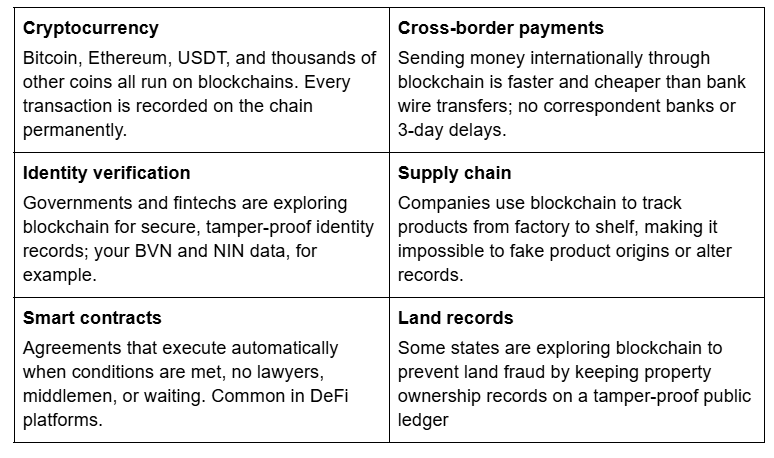
Nigeria’s financial system has historically excluded millions of people, either through lack of access to banking, poor infrastructure, or high transaction costs. Blockchain addresses several of these problems directly.
It removes the middleman: Traditional transfers require banks, which charge fees, impose cut-off times, and sometimes delay or block transactions. Blockchain-based transfers go directly from sender to receiver; faster, cheaper, and without needing a bank account on either end.
It works across borders: Sending money from Nigeria to Kenya or receiving payment from a client in the UK does not require a bank on both sides. Blockchain enables direct transfer between wallets anywhere in the world.
It protects against inflation: With the naira losing value year after year, many Nigerians have moved savings into stablecoins like USDT, dollar-pegged cryptocurrencies that run on blockchain. This allows them to hold dollar value without needing a domiciliary bank account.
When you use AblxTrade to receive cryptocurrency from abroad, whether USDT, Bitcoin, or Ethereum, that transaction happens on a blockchain. AblxTrade generates a wallet address tied to the relevant blockchain network; the sender transfers funds to that address, and the transaction is permanently recorded on the chain. AblxTrade then converts the crypto to naira and credits your wallet.
The blockchain is why your crypto transfer can arrive in minutes rather than days. There are no banks in the middle, adding processing time. It’s just a direct, verified record on a shared ledger.
→ How to Receive Money from Abroad in Nigeria
By design, blockchain is one of the most secure ways to record information. Because thousands of computers must agree before any record is added or changed, it is extremely difficult to hack or alter. However, it is important to note that the blockchain itself being secure does not mean every platform built on top of it is safe. Scams, fake platforms, and phishing attacks targeting crypto users are common in Nigeria. Always use verified, trusted platforms and never share your private keys or wallet seed phrase with anyone.
AblxTrade uses blockchain technology to help you receive money from abroad, buy crypto, and convert to naira; fast, simple, and secure.
Ready to explore cryptocurrency opportunities in Africa? ABLX provides secure, user-friendly platforms for trading and managing your digital assets.
Explore more insights about cryptocurrency, blockchain, and financial technology in Africa.